
Key Takeaways
- Malaysian supernatural folk horror film centred around the Malay belief of susuk, mystical implants linked to beauty, power and spiritual consequences.
- Follows a mother and daughter who uncover a dark family inheritance connected to forbidden rituals and a generational curse.
- Blends supernatural mystery, family drama and folklore with themes of temptation, sacrifice and the consequences of seeking power.
- Explores traditional Malay beliefs by turning the concept of susuk into a horror story about identity, inheritance and hidden secrets.
- Recommended for fans of Malaysian horror, Southeast Asian folk horror and stories built around curses, rituals and cultural mythology.
Plot
Pewaris Susuk follows Maya and her daughter Ayu as they attempt to rebuild their lives after the tragic death of Maya’s mother, Juriah, hoping to leave behind the painful memories connected to their family’s past.
However, their lives begin to change when Maya discovers that their bloodline carries a dark inheritance linked to the forbidden practice of susuk – mystical implants traditionally believed to grant beauty, protection or supernatural power, but which are also connected to dangerous rituals and spiritual consequences.
At the same time, Seroja, a woman who appears to have everything through her influence, success and status, is revealed to be connected to a powerful supernatural pact – a hidden agreement that has given her everything she desires, but demands loyalty, sacrifice and a terrible price in return.
As Maya investigates the truth behind her family’s secret, she becomes trapped in a conflict involving blood ties, forbidden practices and a curse that has been passed down through generations – the more she uncovers, the more she realises that the legacy inherited by her family may be impossible to escape.
With trust beginning to disappear and curiosity leading her deeper into a world she does not understand, Maya must uncover the truth behind the susuk inheritance before the darkness connected to her bloodline claims another victim.
Trailer
Cast & Production
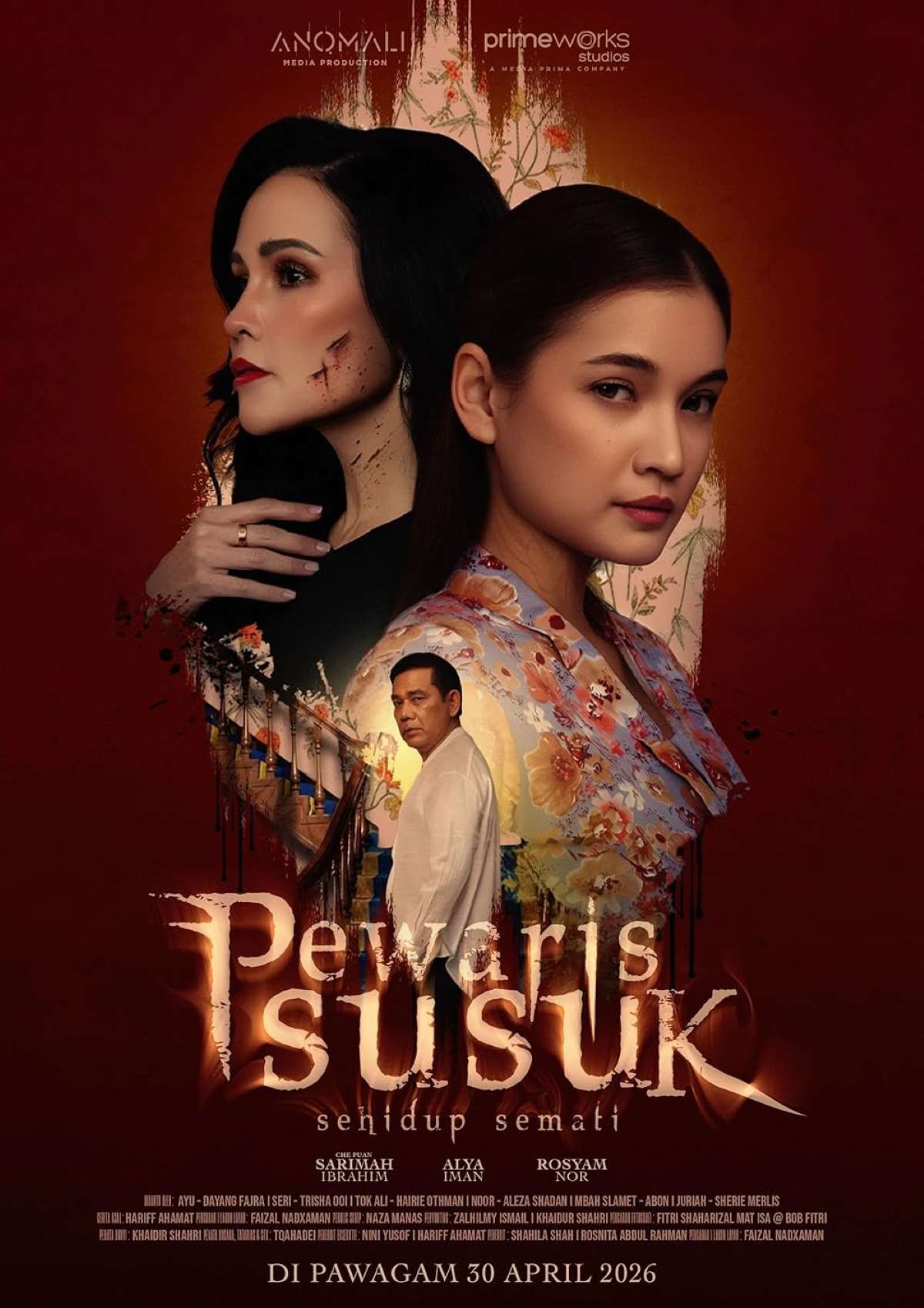
Pewaris Susuk, is a Malaysian supernatural horror thriller directed by Faizal Nadxaman and written by Naza Manas and Faizal Nadxaman – the film stars Sarimah Ibrahim as Seroja, Alya Iman as Maya, Rosyam Nor as Hadiff, Trisha Ooi as Seri, Hairie Othman as Tok Ali, Sherie Merlis as Juriah, Aleza Shadan as Noor, Dayang Fajra Nadifa as Ayu and Abon as Mbah Selamet, is based on an original story by Hariff Ahamat, produced by Anomali Media & Production and Primeworks Studios, with Primeworks Studios serving as the distributor, and released in Malaysia on 30 April 2026 with a runtime of around 94 minutes.
Style and Presentation
Pewaris Susuk takes the traditional Malay supernatural horror concept of susuk and builds its story around inheritance, forbidden rituals and the consequences of supernatural power passed through generations – rather than focusing only on a single ghost or creature, the film explores the darker effects of a family secret that continues affecting those connected to it.
The concept of susuk becomes the centre of the horror, representing the desire for beauty, protection and power while also carrying a dangerous spiritual cost – the combination of supernatural mystery, family conflict and forbidden practices gives the film a more folklore-driven approach to Malaysian horror.
The horror also comes from the idea that the past cannot easily be escaped, as Maya is not simply facing an external supernatural threat but a darkness connected directly to her own bloodline – creating a story about inheritance, temptation and the consequences of choices made by previous generations.
Cultural Context
Malaysian horror filmmakers have often used cultural legends as the foundation for supernatural stories – these films often explore the connection between human desires and the unseen consequences that come from disturbing spiritual boundaries.
Pewaris Susuk follows that tradition by focusing on the belief surrounding susuk, a practice often associated with beauty, attraction, status and protection but also portrayed as something that comes with a supernatural price – the film uses this cultural idea as the foundation for a larger horror story involving family secrets, sacrifice and inherited darkness.
By exploring one of Malay folklore’s most recognisable supernatural concepts, the film continues the tradition of Malaysian horror using local beliefs to create modern genre stories – transforming cultural fears and traditional legends into a supernatural experience centred around identity, family and the dangers of seeking power beyond natural limits.
Why You Should Watch
Pewaris Susuk should appeal to fans of folk horror who enjoy supernatural stories built around curses, rituals and cultural mythology, as the combination of a mysterious family legacy, forbidden practices and a supernatural threat connected to generations gives the film a traditional horror setup with a unique local identity – the focus on susuk also gives the story a different angle compared with more familiar ghost-based horror.
It’s a folk horror story built around beauty, sacrifice, forbidden rituals and Malay supernatural beliefs.
Check out some more Malaysian horror movies.


Leave a Reply