
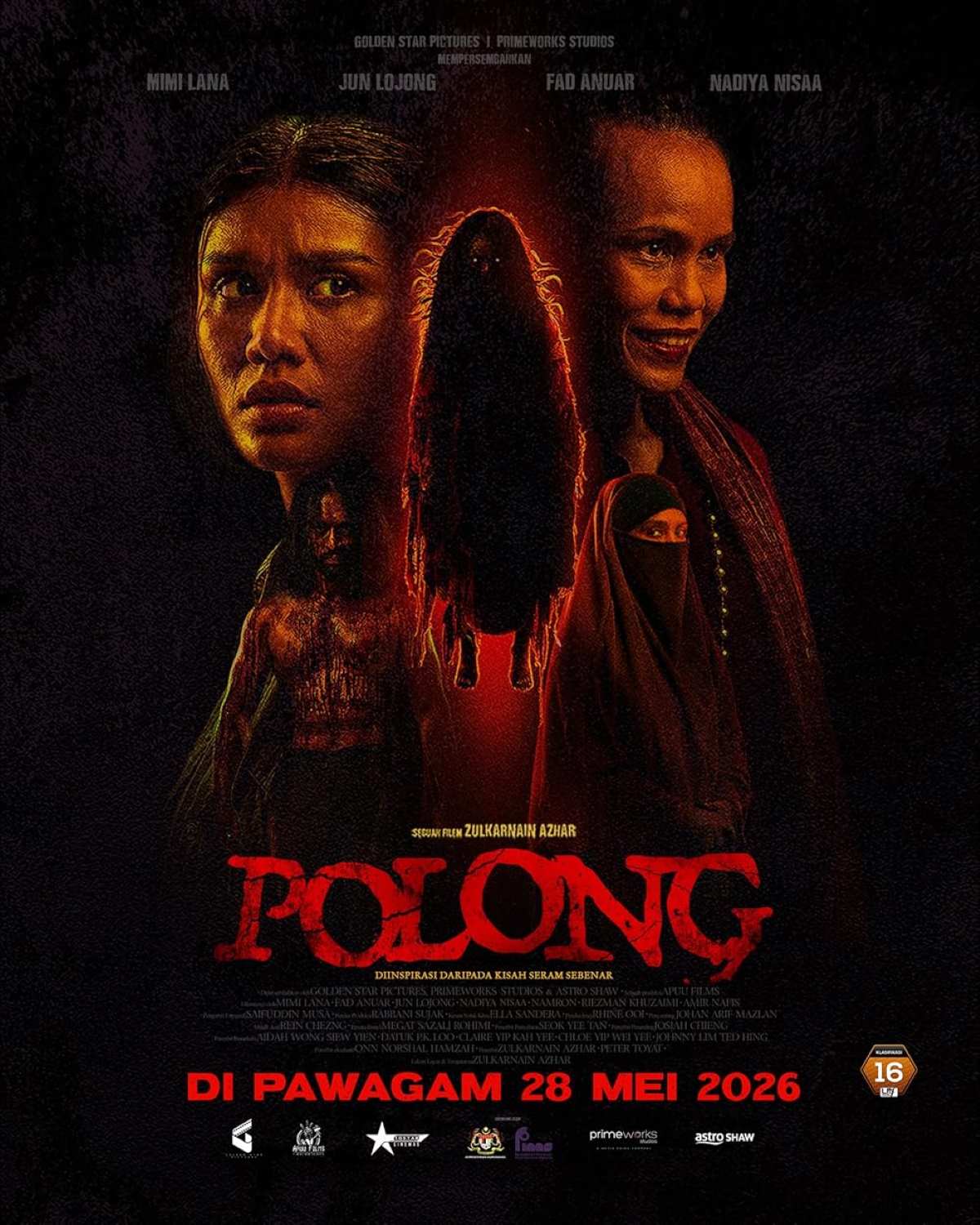
Polong has a pretty interesting hook because it takes a familiar Malaysian horror subject and gives it a much more investigative angle – Mimi Lana plays Fatima, a journalist whose curiosity about the past of Maria Hadi, a woman associated with black magic, eventually puts her in the path of something she probably should have left alone.
And while the film definitely has the supernatural ingredients you would expect, there is more going on here than simply throwing a polong at the audience it seems, particularly through Maria’s relationship with her estranged daughter Marissa, played by Nadiya Nisaa, so the film effectively turns the supernatural threat into something connected to family history, guilt and unresolved consequences.
Trailer
Director, Cast and Some Interesting Facts
Polong was written and directed by Zulkarnain Azhar, with Mimi Lana, June Lojong, Fad Anuar, Nadiya Nisaa and Namron among the principal cast, where it was released in Malaysian cinemas on 28 May 2026, is in Malay and runs for around 120 minutes.
Mimi Lana has also described Polong as one of the most challenging roles of her career, including an exhausting blood-bath sequence that reportedly kept her covered in fake blood from around 7pm until 6am, where the production also deliberately created a filthy, chaotic apartment for Fatima and Mamat, with Lana describing the real location as having an overwhelming smell from rotten food.
There was also a strange little story surrounding Lana’s involvement – before filming, she said she heard her bedroom door slam open after reading the script, and something similar happened again after a production discussion, but she obviously couldn’t say whether it meant anything supernatural, but it’s exactly the sort of story that horror productions inevitably end up collecting.
The film was also made in two versions – a Malaysian cinema version and another intended for international film festivals, which is a nice indication that the filmmakers were thinking beyond the domestic theatrical release.
A Film That Divided People
The reception has been pretty mixed for this one, too – on IMDb it currently sits at around 6.6/10, while Malaysian reviews have been split between people praising the acting, cinematography and practical effects and others finding the storytelling messy or the jump scares excessive.
And yet commercially, the movie did very well – after its early screenings and first four days of release, Polong had already taken RM5.5 million at the Malaysian box office, despite the mixed reactions appearing online.
I also like that the reviews aren’t all saying exactly the same thing, as some critics praised the slow, character-focused storytelling and visual style, while others thought the film leaned too heavily on predictable scares.
More Than Just a Polong Movie
The polong is a figure from Malay supernatural belief associated with black magic, and that’s obviously the major folklore hook here, but the film isn’t simply using it as another creature to throw into a haunted-house story, and what makes the concept more interesting is the idea of spiritual consequences being inherited.
There is also a loose connection to the notorious Mona Fandey case, something several reports and reviews have picked up on, although Polong is not simply a direct retelling of that real-life case, which give it an interesting Malaysian context because it takes a subject that already carries real-world associations and mixes it with traditional folklore rather than pretending the supernatural exists in isolation.
The Look of the Horror
One thing that seems to have attracted fairly consistent praise is the visual presentation, where The New Straits Times described the film as favouring atmospheric dread and folklore over cheap scares, while other reviews have highlighted the cinematography, practical effects and production design.
Personally, that’s probably the side of Polong I’d be most interested in- the abandoned and grimy environments, the prison scenes, the kampung setting and the increasingly uncomfortable atmosphere give Zulkarnain Azhar plenty of material to work with visually.
The film apparently does have plenty of jump scares, though, so despite the psychological and folklore elements, don’t go into it expecting two hours of quiet, creeping J-horror-style dread, as there is definitely a more conventional Malaysian horror streak running through it.
Check out some more Malaysian horror movies.







Leave a Reply