
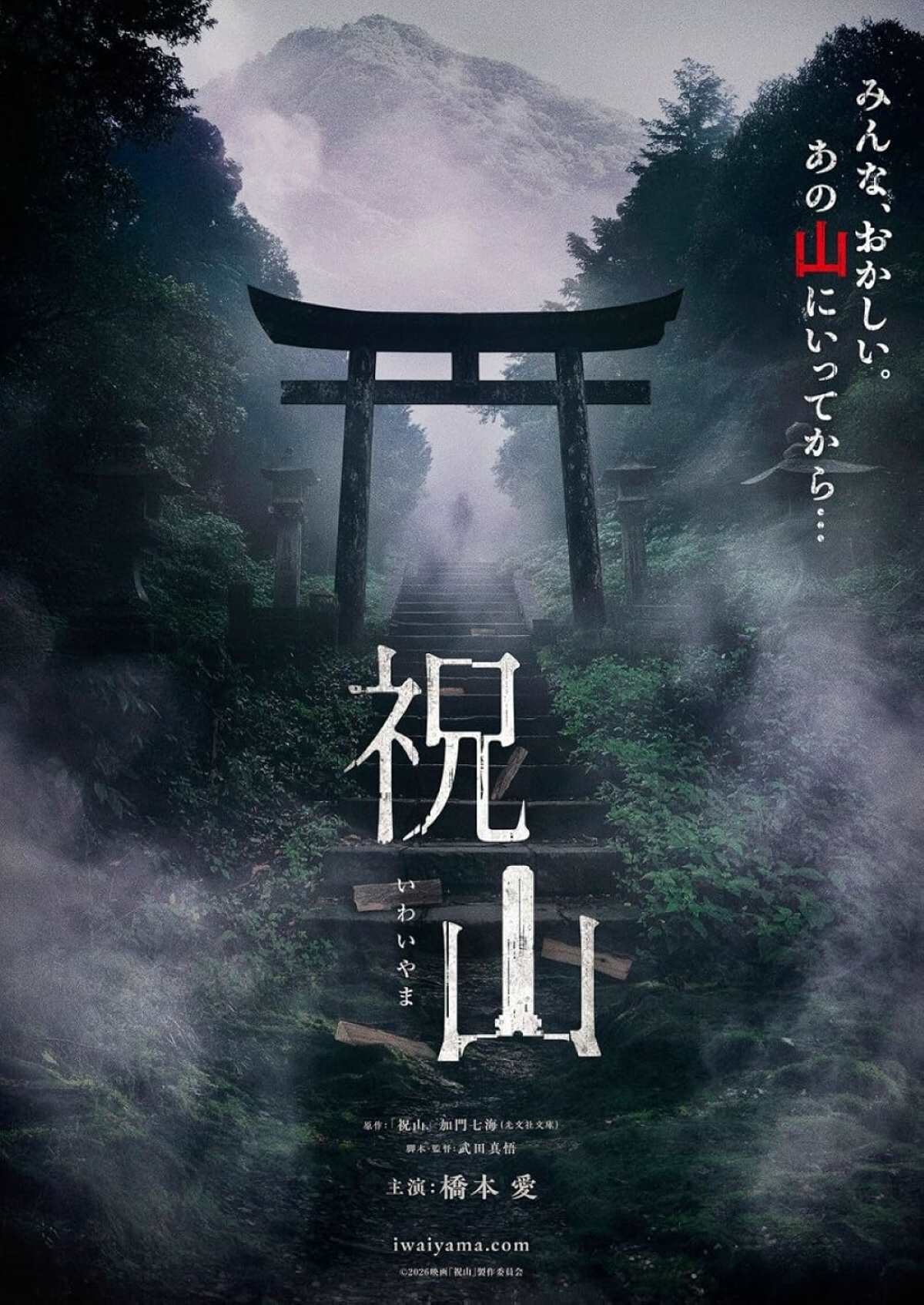
A trip to an abandoned mountain ruin sounds like exactly the sort of stupid idea people make when they want to prove they’re brave – until something actually happens there and everyone involved has to live with the consequences – that’s the starting point for The Mountain, a Japanese horror film that takes a relatively familiar J-horror setup and puts more emphasis on the mystery surrounding an unexplained incident than simply showing us what went bump in the night.
What Happened on the Mountain?
Kazuno becomes involved in the mystery after receiving a letter from an old friend about an unsettling experience at an abandoned mountain ruin, where the original visit was meant to be little more than a test of courage, but things took a much darker turn, leaving the people involved struggling to explain what they experienced.
Kazuno starts investigating, speaking to those who were there and trying to piece together what actually happened, then one of the people connected to the incident dies under mysterious circumstances, which changes the nature of the investigation completely, particularly as the survivors begin experiencing their own problems and the mountain starts feeling less like the location of something that happened in the past and more like something that has followed them out of it.
Trailer
From Nanami Kamon’s Horror Novel
The Mountain is directed and written by Shingo Takeda and is adapted from the horror novel by Nanami Kamon, where the cast includes Ai Hashimoto, Ren Ishikawa, Sayu Kubota, Takuya Kusakawa and Yuya Matsuura – the film comes from TBS GLOWDIA, STUDIO STROLE and S.D.P, with S.D.P handling distribution, and it was released in Japan on June 12, 2026, and runs for approximately 102 minutes.
That literary origin is worth noting because the film’s approach feels more concerned with gradually putting pieces of a strange incident together than creating a simple monster-versus-victims setup.
A Mountain That Becomes Part of the Mystery
One of the better ideas here is that the location isn’t treated as disposable, as the mountain isn’t simply where the characters encounter something supernatural before the story moves somewhere else, so what happened there becomes the thing Kazuno has to keep returning to, both literally and through the accounts of the people who were involved.
That gives the film a slightly different rhythm, as rather than constantly escalating the supernatural activity, it can spend time questioning what actually happened, whether the survivors remember everything correctly and whether there is a connection between the original incident and what happens afterwards.
That uncertainty is much more useful to this kind of horror than simply having someone appear in a doorway every ten minutes.
Shingo Takeda Keeps Things Uncomfortable
Director Shingo Takeda is also credited as the screenwriter, so there is a fairly direct connection between the original novel adaptation and the way the mystery has been translated to the screen, so the decision to make this a psychological supernatural horror rather than an outright creature feature also gives the performances more importance, so Ai Hashimoto and the rest of the cast have to sell the idea that these people are trying to make sense of something that doesn’t fit neatly into reality.
And with a runtime of around 102 minutes, there isn’t an enormous amount of room for the movie to wander off into a dozen unrelated subplots, which is probably a good thing.
The Japanese Horror Connection
There is something very J-horror about the basic fear here – not necessarily knowing exactly what the supernatural force is, but knowing that something is wrong and being unable to get a satisfactory explanation for it.
Japanese horror has repeatedly found mileage in that kind of uncertainty, particularly when an apparently ordinary place becomes associated with something inexplicable, and here, the abandoned mountain setting gives that idea a particularly isolated quality – there is nowhere obvious to turn for answers, and once the characters begin investigating, every new piece of information seems to make the original incident more troubling rather than less.
I do think we have a solid foundation for a good slow-burn Japanese horror movie, particularly when the source material already comes from a horror novelist and the film has enough mystery built into the premise to keep the supernatural elements deliberately unclear.
Sometimes the most effective horror isn’t knowing what is haunting the characters, it’s wondering whether they ever actually managed to leave it behind.
Check out these other Japanese horror movies too.





Leave a Reply