

Plot: Airi (Moeka Hoshi) makes a living helping restless spirits move on, travelling around Japan with her dead younger sister Miku (Kurumi Inagaki) as her constant companion, when she’s called to an isolated country house owned by Teiko (Tae Kimura), where something unpleasant has been making life difficult. Teiko’s son Gunji (Kento Kaku) isn’t particularly convinced by Airi’s abilities, but the haunting soon turns out to be far more troublesome than either of them expected.
Ghost stories are nothing new, but Never After Dark has at least got a rather good central character in Airi. She’s got a bit of attitude, doesn’t seem particularly fazed by the dead and even has her younger sister Miku along for company, although Miku is dead herself, but I enjoyed watching the relationship between the two, as there’s also decent amount of humour in their exchanges, too, before the film gets down to the much darker business of its haunted-house mystery.
The two actresses certainly worked well together, and you really feel a proper sibling relationship between them, with the usual teasing and occasional irritation, and it gives Airi a bit more depth to play with as a character, where the scenes together often ended up being some of the most enjoyable parts of the film.
But I am sure most people might not really care about that part of the dynamic, and will watch Never After Dark for the scares only, and the film has some for sure, but maybe not always in the way many will anticipate, featuring a good old fashioned house which is always a good horror location, full of dark corners with the sort of atmosphere that makes you wonder why anyone would willingly spend a night there.
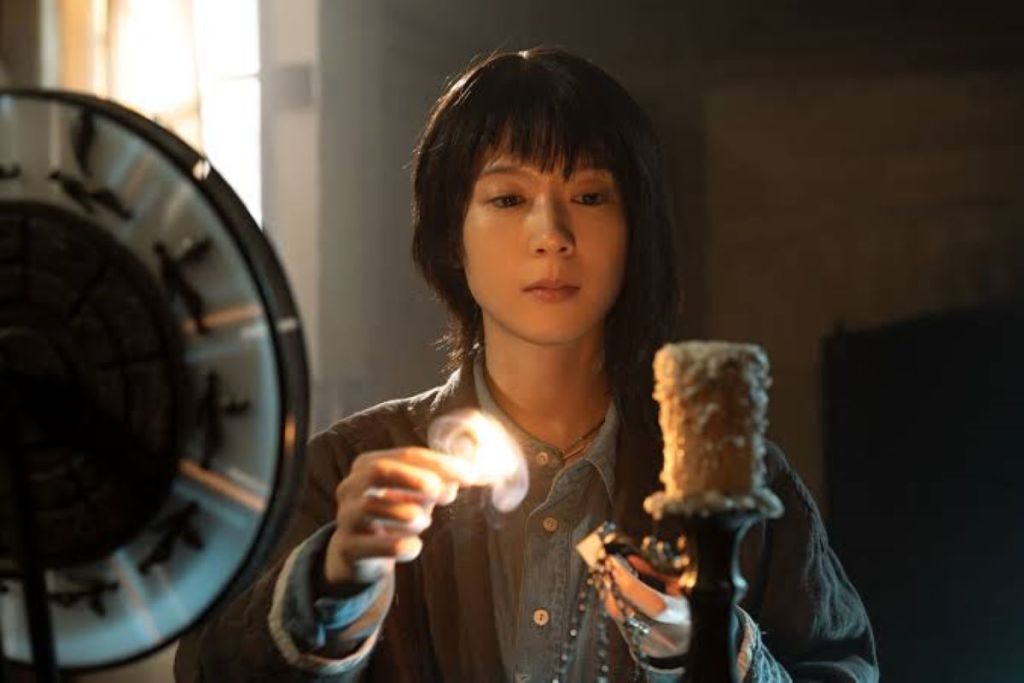
Director Dave Boyle gets plenty of mileage out of the setting, too, displaying a nice use of shadows and reflections, with enough going on in the background to keep you looking around the screen, but once the haunting starts to reveal itself, the film ramps up a bit – the spirit has this unpleasant appearance, and some of the imagery is pretty well done. I particularly liked the rituals involving mirrors, candles and scissors. It’s a little different from the usual exorcism business, with a bit more thought behind it than simply having somebody wave a religious object around while a ghost throws furniture.
The main problem is that the film takes a while to get where it’s going. There’s quite a lot of investigation and explanation before the horror really kicks into gear, and some of that material could have been tightened up. I was happy to spend time with Airi, but there are stretches where the mystery starts going round in circles and gets a bit too complicated for its own good, and a few of the revelations also get a little confusing, but that might be a me issue of course.
Thankfully, there’s a decent payoff. The practical effects are a real highlight here, with some excellent makeup work and physical creature effects, and I’m always pleased to see filmmakers putting this sort of effort in, with a few images here that are far more effective than another load of digital smoke and glowing eyes. It isn’t flawless – some of the effects look a little rough, and the camerawork occasionally makes the action harder to follow – but there’s a lot to enjoy and appreciate in that department.
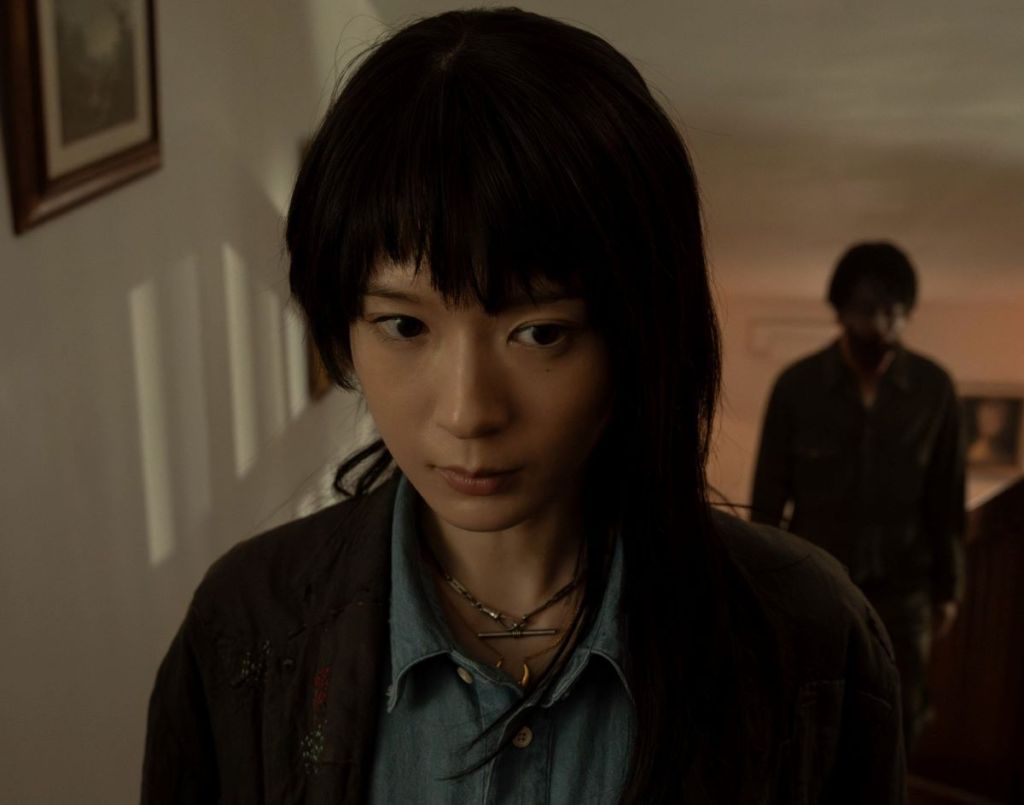
The final stretch however is where Never After Dark really comes alive – things get bloodier, stranger and considerably more chaotic, with some cracking horror moments that make the slow build worthwhile. I won’t spoil the direction it takes, but it becomes more than a straightforward haunted-house story, and I liked that Boyle was prepared to take things somewhere a little less predictable.
I did want a bit more from some of the supporting characters, and the plot could have been easier to follow in places, but the central pairing is strong, the setting works and the effects are exactly the sort of thing I want to see in a horror film. It also helps that Hoshi is such good company – she gives the film a personality that carries it through the slower sections.
Never After Dark is an enjoyable addition to the ghost-story pile, if a bit generic at times, but it has enough going for it too. A few pacing problems and a muddled patch in the middle aside, the atmosphere, performances and wonderfully unpleasant final act make it well worth a watch.
Never After Dark is available to stream on digital platforms – Never After Dark on IMDb.
More Asian horror reviews.
- Colony (2026) Review: A Bloody Zombie Movie That Almost Gets Everything Right
- New Group (2026) Review: Japanese Horror Gets Weird With Human Pyramids
- One Cut of the Dead Review: A Zombie Movie That Is Much More Than It First Appears
- The Medium (2021) Review: Creepy, Disturbing and Brutal
- Incantation (2022) Review: This Horror Film Wants You to Join the Curse
Leave a Reply