
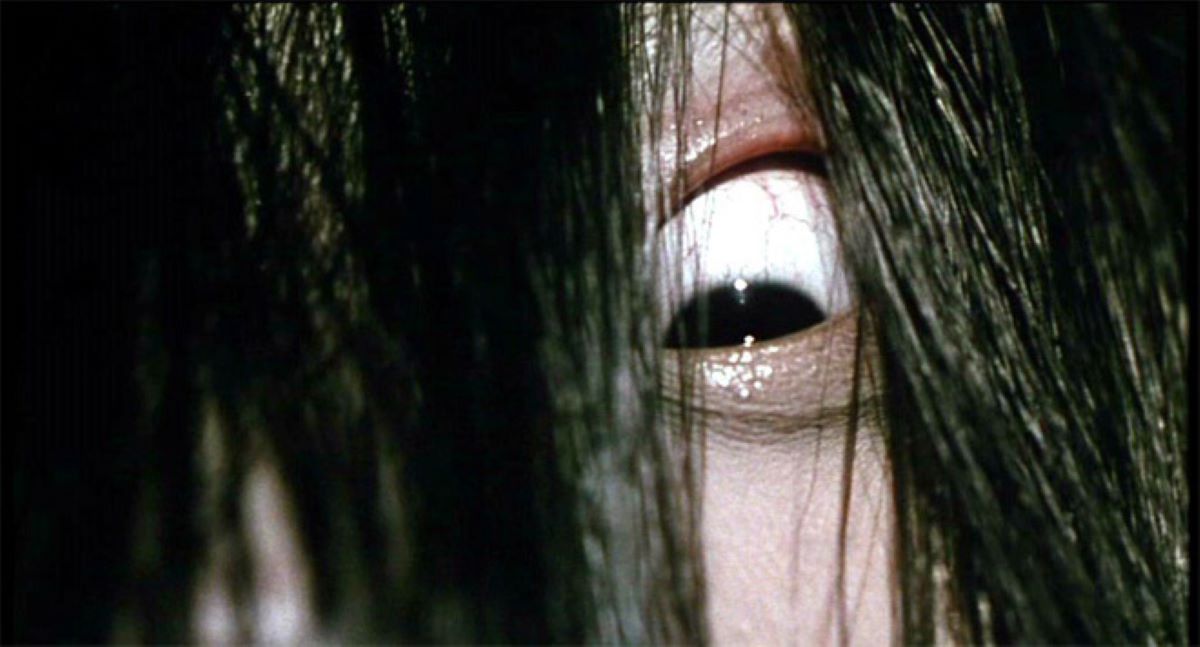
If you’re like me, you probably look back pretty fondly on that period in the late 1990s and early 2000s when getting into Japanese horror felt like stumbling onto a completely different version of the genre. You watched Ring and Ju-On: The Grudge, and suddenly you wanted to track down everything else coming out of Japan – even if half the movies people recommended turned out to be baffling or barely scary at all. Honestly, that hit-and-miss unpredictability was half the fun.
Ring was obviously the one that made everyone outside Japan sit up and pay attention, and what still sticks with me isn’t just Sadako crawling out of the television, which is obviously the most famous cene – it’s just how ordinary the whole thing felt. VHS tapes and living-room TVs were completely mundane everyday objects, so attaching a curse to them meant the movie followed you home afterwards without needing any massive effects sequences.
Then Ju-On: The Grudge turned up and went in the complete opposite direction, ditching a neat detective structure for fragmented, jump-out-of-your-skin dread where Kayako’s croaking noise and jerky movements stayed stuck in your head – and where nobody ever actually beat the curse at the end.
Of course, people tend to boil that whole era down to Ring and Ju-On – maybe throwing in Dark Water, Pulse, and Audition – when part of the appeal was how wildly different those movies actually were from each other. Dark Water felt miserable and claustrophobic, Pulse tapped into early-internet loneliness in a way that was almost more depressing than frightening, and Audition proved Japanese horror didn’t even need ghosts.
More than any single movie, though, what I really miss is how you actually discovered them back then. Today, if a Japanese horror film starts getting buzz, you can watch the trailer, read ten reviews, and find three YouTube videos explaining the ending before you’ve even pressed play.
Back in the DVD and early internet era, you often went in completely blind with nothing more than a title or a forum recommendation telling you something was supposed to be disturbing – and going in without knowing the rules made the scares hit way harder.
Once Hollywood realised there was money on the table, the inevitable remakes arrived. I actually think Gore Verbinski’s The Ring is way better than people give it credit for, because he understood you couldn’t just photocopy Hideo Nakata’s movie shot for shot. The problem was everything that came after, once pale girls with long black hair and haunted electronics turned into instant horror clichés – stealing away the exact unfamiliarity that made the originals work in the first place.
Japanese horror never actually stopped being good after the early 2000s of course – the spotlight just moved on to South Korea, and then to Indonesia, Thailand, and India, while streaming made international movies effortless to find. Watching Ring on a flatscreen today, the VHS tapes obviously look like museum pieces, yet the basic fears underneath – something creeping into your house, technology isolating people instead of connecting them, trauma refusing to stay buried – haven’t aged a day.
I miss those days.
More Asian horror articles.



Leave a Reply